![]() |
|
Home | |||||
| Kandy City | ||||||
| Municipal Council | ||||||
| Heritage Commitee | ||||||
| Arts & Crafts | ||||||
| Festival | ||||||
| News & Events | ||||||
| Inquiry | ||||||
| City Map | ||||||
. |
The Kandyan Art Association |
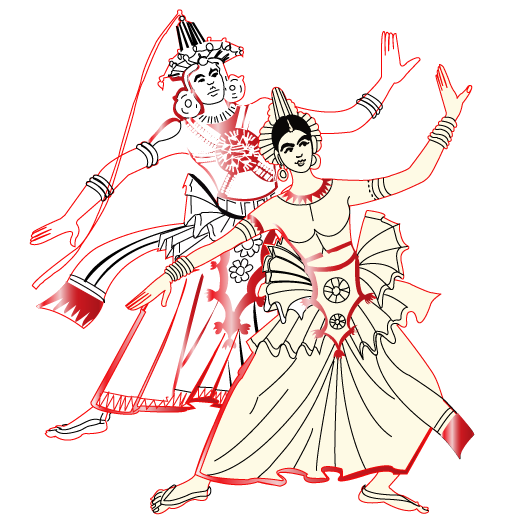
Arts and Crafts form a rich mosaic in the cultural fabric of the Kandyan Society. The Artificer, Dancer, Weaver, Wood Carver, Artist and the Musician were held in high esteem. The contributed to the economic life of society second only to Agriculture. The ancient Artists and Craftsmen all over Asia had been well organized into guilds. A similar system prevailed in Sri Lanka as well from early times. The Knowledge practices and out forms were passed down from generation to generation. Even marriages were within the same group so that the craft was closely guarded. The artists and craftsmen had the patronage of the king. The best were permanently employed in the royal household and were gifted with land in return for their services. All Royal requirements including, jewellery, ornaments utensils were turned out by them. Gifts given to other Heads of state on Delegations were all turned out by these craftsmen. Jewellery and ornaments required by the nobility too were turned out by the traditional Craftsmen. These items were also equally beautiful and high in quality. The Kandyan Dancer is symbolic with the culture of the people. They performed in the Temple, Religions Festivals especially the Annual pageant (Perahera) and at customary festivals such as weddings etc. There are different types of dances performed by these artists and all of them are represented in the Perahera. The Drummers form another group. They are also distinguished by the different types drums they use. Kandyan Dancing and Drumming are unique. They differe from those practiced in there are as of the country. The paintings done by the artists of the Kandyan period are also destructive in style, and character. Temple paintings are still preserved and the style lives on. The royal patronage was useful form the development and sustenance of the arts and Crafts. However with the car guest of the Kandyan Kingdom by the British there was a decline in the cultural life of the people. The effects of subjugation were felt for and wide and naturally these activities too were affected. Without a Royal household many lost their livelihood even guides and groups drifted. Only a few families continued their crafts in the backwoods. It was in such a climate that the Govt. Agent of the Central Province Sir, J.F.Dickson revived the dying crafts forming the Kandyan art Association in 1882. Initially all activities were centred in the Kandy Kachcheri. But in 1904 the Association moved into the palle vahala the quarters used by the Ladies of the Royal Household. There after it was shifted to its present location in 1924. Their building was used as a military hospital during British times. The Association was incorporated as a trust 1919 with the objective of preserving the Kandyan arts & crafts. Although formally organized in 1882 records show that this organization had existed since the 1830s. The affairs of the Association are managed by a committee chaired by the Govt. agent (Ex officio) Nineteen prominent citizens of the District are members of the committee. The GA, Additional Govt. Agent and the Administrative officer of the Kachcheri form the board of trustees. The objectives of the Association according to its constitution are: -
The present Kandyan art association complex comprises a trade center, cultural center and a restaurant (Avanhala). The Cultural center built to commemorate the centenary consists of a large stage, a two tyred audience hall with a sealing capacity of 1000 seats. It was designed by an internationally recognized architect and a citizen of Kandy Ms. Minette de silva (the daughter of former state councilor for kandy George E.De silva and the sister of former MP, Mayor and Ambassador Fred E.De silva). Minette wanted to have an open Air theater but due to the climatic conditions in Kandy a roof was designed later. Although the Association managed with its own finances the state assisted the construction of the cultural center building complex. It was meant to be used as a training center for the arts. Reputed craftsmen in brassware, lacquer work, Dumbara mats, weaving and handloom work are given the opportunity to practice their crafts in these premises. The Association has plans to build small cottages on the land to house these craftsmen. |
Wood Carving |
|
![]() ![]() |
wood carving in the Kandyan rerion was originally associated with architecture. Wooden pillars, roofs, doors, windows, door-bolts and even wooden bridges were all decorated with finely carvad desighns.Modern artefacts are produced without prejudice to the traditional styles of carving. The creations of the present generation include many beautiful objects of art such as trays, wall plaques and figurines both secular and religions. |
Sesath Work |
|
![]() |
Sesath is a type of sunshade of great artistic and cultural value and unique to Sri Lanka. It is used on ceremonial occasions as a symbol of dignity and as an item of interior decor in residences. Home of the craft is Unaveruwa in Matale. |
Leather Products |
|
![]() |
Although production of Leather goods has not been a traditional Kandyan handicraft there are a few talented craftsmen in the region who produce high quality ladies hand bags, wallets, belts etc. Embossed with traditional and modern designs, owing to the contemporary demand for such products. |
Lacquer Work |
|
![]() |
The task of the lacquer worker originally was to decorate the arrowshafts, flag staves, bed - legs and walking sticks, for the nobility. Although most of these items are not in use now, the present generation of craftsmen produce several other articles such as Sesath staves ash trays jewellery boxes stands for flower pots etc using the age- old techniques. |
Brass, Silver and Mixed Metal Work |
|
![]() |
The best exponents of the art of brass work are in the Kandy and Matale Districts. The variety of items produced display a unique cultural identity. Other than the traditional items such as oil lamps, trays, bowls vases, spittoons etc among the recent additions are ash trays, mirror frames, serviette rings, letter openers and letter holders.Silver is used in making expensive utility objects like jewellery jewellery - boxes, tea - sets, trays, bottle - openers, candle - holders and various cutlery items such as spoons, bowls etc.Articles made of copper and brass are also plated with silver or gold or anodized to prevent tar noshing and to eliminate the need for regular polishing. |
Kandyan Jewellery |
|
![]() |
Kandyan Juwellery, once worn by both men and women carry a complete range of head to foot ornaments. Men usually wore chains, pendants, waist chains and rings and women wore earrings chains bracelets and rings etc.A bride dressed in the traditional Kandyan costume bedecked with the full array of jewellery presents a beautiful sight which is the dream of every Sri Lanka bride groom.Kandyan Jewellery is unique in style and design and bear the half mark of traditional Kandyan master craftsmen. |
Reed Ware |
|
![]() |
Craftsmen (and women in particular) in the Kandyan region also specialist in making utility household articles from Tala leaf from a locally grown variety of a palm tree. Mats. shopping bags, food baskets, grain storage bags etc are produced out of this leaf or using other locally grown reeds, such as " Vetake" and " Pung". |
Dumbara Mats |
|
![]() |
Mat - weavers of Henawala in the Kandy District practice a singular style of mat weaving using a locally grown hemp known as "Hana" . The fiber extracted from the leaf of this plant is processed and dyed to enable the weaving of colorful mats and wall hangings. These are gaily decorated with stylized floral, animal and geometrical patterns preserved through generations of craftsmen. The new generation of craftsmen also produce cushion covers, hand bags, shopping bags, letter holders, fans, screens etc to meet the demands of the contemporary society mostly using the same traditional designs and motifs. |